
香港特別行政區 訴 馮嘉文 [2026] 2 HKC 572; [2025] HKCA 247 (Tien Kei Rui)
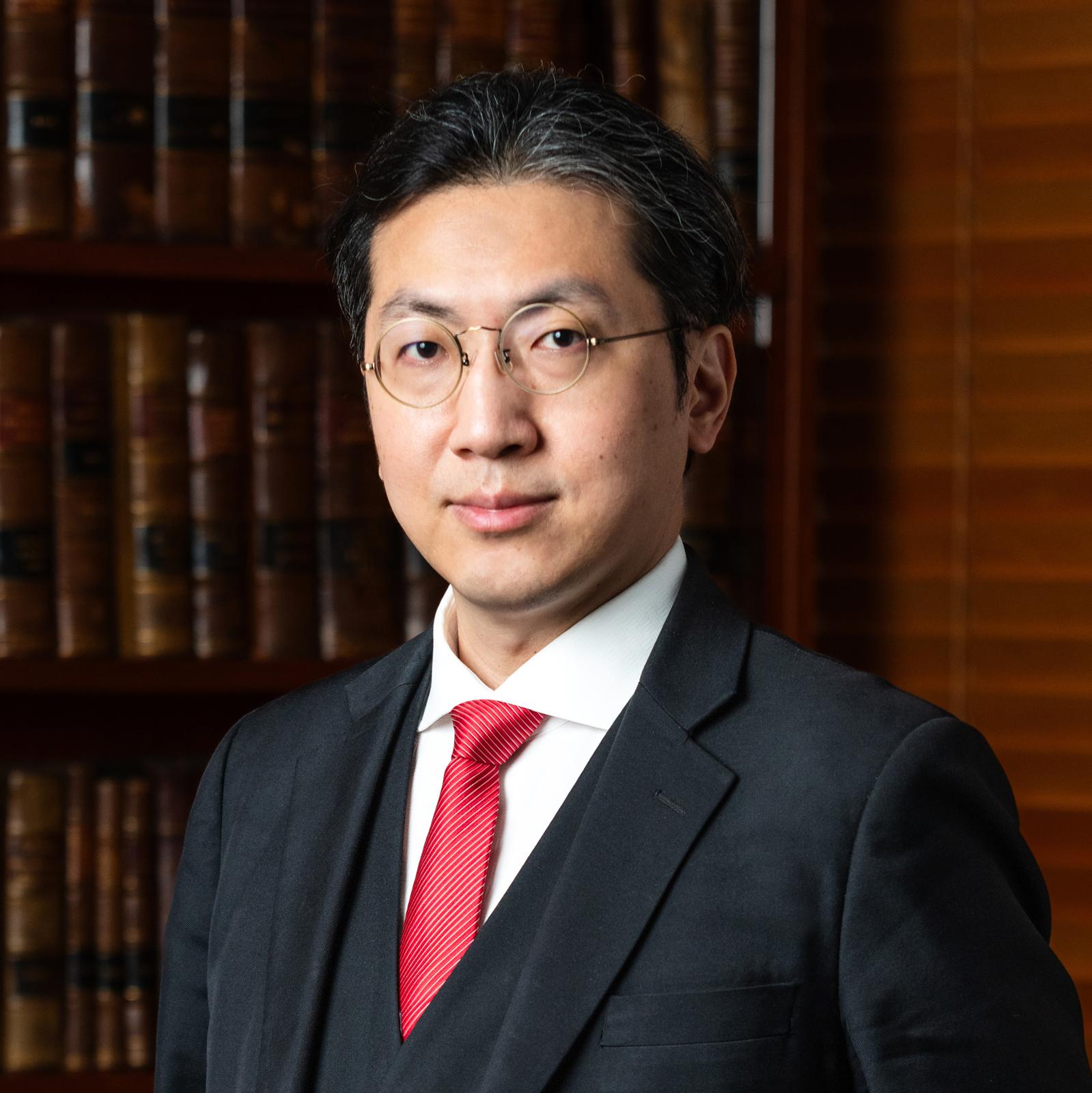
Tien Kei Rui represented the 3rd applicant (D8) in 香港特別行政區 訴 馮嘉文 [2026] 2 HKC 572; [2025] HKCA 247.
The five applicants (D1, D2, D8, D10 and D11) and others (a total of 12) were jointly tried in the District Court of one charge of riot. D1 was convicted after trial; D2, D8, D10 and D11 pleaded guilty before the trial commenced. In the afternoon on 29 September 2019, protesters started off at Sogo Department Store in Causeway Bay, travelled along Hennessey Road and Queensway, towards the outside of the Government Headquarters on Harcourt Road, Admiralty. The riot erupted at the vicinity outside the Government Headquarters at 16:22. Around 500 protesters assembled on the pavement, traffic lanes, and flyovers. Some threw at the Government Headquarters petrol bombs, bricks, stones, and hard objects alike; some used rubber bands to shoot hard objects at the Government Headquarters; and some irradiated laser beams at police officers defending the Government Headquarters. Water-filled barriers outside the Government Headquarters were hit by petrol bombs and set on fire. At 16:23, police deployed specialized crowd management vehicles and launched tear gas to disperse them. At 16:48, officers rushed out of the Government Headquarters and arrested the applicants who were running away. Some protesters retreated elsewhere, continued with the stand-off, and did not disperse. D1 testified that he was merely passing by and did not participate in the riot. The Deputy District Judge rejected D1’s evidence and considered that he was within the vicinity of the riot before his arrival, he knew the riot was going on, and he participated in it with others. At sentence, the judge, based on the defendants’ gears (including D1’s umbrella, D2’s and D8’s cut-resistant gloves, D10’s trekking pole and a long umbrella with a pointed head, D11’s trekking pole and a pair of gloves with protective armor at the metacarpals, etc), rejected the submission that their level of participation was the lowest or that their presence was merely furthering the riot. The judge adopted a starting point of 5 years 4 months’ imprisonment: as D1 agreed at trial some facts, 1 month was reduced, and he was sentenced to 5 years 3 months’ imprisonment. D2 indicated his guilty plea before the pre-trial review, was given a 25% reduction and sentenced to 4 years’ imprisonment. D8 indicated his guilty plea before the pre-trial review, but his remorse was highly insufficient. He was given 20.3% reduction, and sentenced to 4 years 3 months’ imprisonment. D10 indicated his guilty plea after pre-trial review but before the trial commenced. He was given 21.88% reduction, and sentenced to 4 years 2 months’ imprisonment. D11 indicated his guilty plea after pre-trial review but before the trial commenced, volunteered in serving patients during the COVID-19 pandemic. He was given 25% reduction, and sentenced to 4 years’ imprisonment. D1 applied for leave to appeal against conviction, and all applicants applied for leave to appeal against sentence. Their common grounds of appeal were as follows: (1) The starting point was the highest among those adopted by other District Judges in respect of the same riot, such sentencing disparity caused prejudice; (2) There was a lack of direct evidence on their participation, the judge erred in holding that the items in their possession were for the purpose of committing damaging and offensive conduct and hence they actively participated in the riot. D8 also alleged that, as the judge disentitled him the 25% reduction by reason of his ‘highly insufficient remorse’ after having made untrue accusations against police, the judge erred in principle by reducing it to 20.3%. D11 also alleged that the judge failed to adequately consider he might be struck off from the practice as a medical doctor and thereby the judge should have given him extra reduction.
Held, unanimously, refusing D1’s application for leave to appeal against conviction, and dismissing the appeal, granting all applicants leave to appeal against sentence, dismissing D1, D2, D10 and D11’s appeals against sentence, allowing D8’s appeal against sentence, and substituting the sentence of 4 years 3 months’ imprisonment with 4 years’ imprisonment:
Per M Poon JA
D1’s Appeal against Conviction
(1) The trial judge correctly understood and applied Lo Kin Man. A riot never consisted of a stationary offence; it was highly fluid in nature. In determining the scope of a riot, the court must adopt a realistic view with flexibility. The evidence of D1 was ridiculous. If he could be said to be ignorant of the commotion nearby, this was mockery to the court. As the trial judge considered the cumulative effect of the circumstantial evidence and made the only reasonable inference, the judge could not be faulted. D1’s grounds of appeal were unarguable. HKSAR v Lo Kin Man [2021] 6 HKC 759, (2021) 24 HKCFAR 302, [2021] HKCFA 37 applied (paras 13-23).
Appeals against Sentence
(2) It could be said that there would be a myriad of variations in a riot case regarding the facts, the defendant’s background, his motives in committing the offence, and the role he played. Therefore, a comparison with the sentences in other cases (even though they were sentencing cases at first instance involving different stages of the riot in Admiralty on the same day) could not help in determining whether the starting point adopted by the trial judge was appropriate. The crux remained in the gravamen of the offence, the applicable sentencing factors, and whether the sentence was appropriate. The gravity of a riot hinged on the conduct of all participants collectively; it was not limited to the action or inaction of individual participants. As the present riot involved many people, it was perfectly proper and understandable that its trial could not be held at the same time before the same court but needed to be separated into different occasions. The sentences imposed by other judges in the District Court were not instructive, and they were not binding on the Court of Appeal. The only consideration was whether, on the facts and taking the aggravating factors into account, the starting point of 64 months’ imprisonment adopted by the trial judge was wrong in principle or manifestly excessive. The ground on sentencing disparity failed. The riot lasted for 26 minutes and at least 500 people were involved. On that day, there were three riots in Admiralty, and the present case was the second one targeting the Government Headquarters, which caused a complete blockage of the traffic lanes on Harcourt Road. The participants targeted the Headquarters and posed a serious threat to the Government Headquarters, the buildings nearby, and the public. The trial judge correctly noted that this was direct confrontation against the Administration. The judge correctly noted that the riot lasted rather short, not because the rioters stayed calm and exercised restraint but because of the police’s timely action. He felt concerned with the attack on the Government Headquarters, which was a very serious matter that could be an aggravating factor; he gave weight to this factor. He had considered the outfits of individual defendants, and their gears were items commonly used by participants of unlawful assemblies and riots. He correctly held that all defendants were not only present in furtherance of the riot, but their level of participation was not the lowest, and the level of violence was far higher than that in Yeung Ka Lun, Tang Ho Yin, and Leung Tin Kei. The ground on excessive starting point failed. HKSAR v Tang Ho Yin [2020] 1 HKC 475, [2019] 3 HKLRD 502, [2019] HKCA 611, Secretary for Justice v Wan Tat Yeung [2022] HKCA 1328, [2022] HKCU 4708, Secretary for Justice v Tong Kin Pong [2023] HKCA 896, [2023] HKCU 3620 and Secretary for Justice v Yu Ka Kui [2020] HKCA 1019, [2020] HKCU 4386 applied; R v Stroud (1977) 65 Cr App R 150, R v So Hung-lee [1986] HKLR 1049, [1986] HKCU 271, HKSAR v Abdallah [2009] 2 HKC 197, [2009] 2 HKLRD 437 and HKSAR v Chau Ping [2014] HKCU 53, (CACC 2/2013, Macrae JA, Barnes and McWalters JJ, 8 January 2014, unreported) followed; R v Fawcett [1983] 5 Cr App R (S) 158, HKSAR v Hui Sze Ping [2003] HKCU 262, (CACC 426/2002, Stuart-Moore VP and Gall J, 26 February 2003, unreported), HKSAR v Ho Chun Yu [2018] HKCA 90, [2018] HKCU 577, HKSAR v Yeung Ka Lun [2019] 1 HKC 296, [2018] HKCA 146 and HKSAR v Leung Tin Kei (No 2) [2020] 3 HKC 659, [2020] 4 HKLRD 428, [2020] 4 HKLRD 462, [2020] HKCA 275 considered (paras 33-52).
D11
(3) It was inconceivable that D11, who was a specialist in emergency medicine and was suffering from foot injury, carried a trekking pole just in case. His hands wearing gloves (with protective armor at the metacarpals) could not be said to be for protective use; the four bulges could be used for assaulting another. The trial judge had considered that because of the present case, D11 might be struck off from his practice as a medical doctor by the Medical Council of Hong Kong, and his sentence might be reduced as matter of discretion. But the judge considered that the conviction would not necessarily so result. HKSAR v Mak Wan Ling [2020] HKCFI 3069 and R v Richards (1980) 2 Cr App R (S) 199 considered (para 34).
D8
(4) When the Court had set down the trial dates, and a defendant indicated a guilty plea before the trial date, he could receive a 20 to 25% reduction. The principle on reduction of sentence by reason of a guilty plea hinged on its utilitarian value, and public interest was involved. The trial judge refused to give a 25% reduction because D8 made untrue allegations against police. Although D8’s counsel criticized the police for using unnecessary violence on D8, he did not attempt to reduce D8’s culpability. The Court considered the judge erred in giving only 20.3% reduction by reason of D8’s insufficient remorse. D8, like other defendants, should have been given the same 25% reduction. HKSAR v Ngo Van Nam [2016] 5 HKC 231, [2016] 5 HKLRD 1 and HKSAR v Ma Shu Keung [2020] 5 HKLRD 90, [2020] HKCA 678, [2020] HKCU 3320 applied; HKSAR v Lee Man Ki [2000] HKCU 248, (CACC 66/2000, Mayo VP and Wong JA, 18 April 2000, unreported) considered (paras 53-63).
[The above is excerpted from the headnote to the report in HKC.]