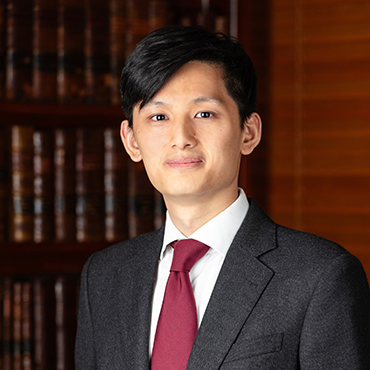

HKSAR v Best Pencil (Hong Kong) Ltd [2025] 4 HKLRD 1044, [2024] HKDC 1430 (Jay Koon)
Audrey Eu SC, David Ma, Jay Koon, Allison Wong and Denise Or represented the 2nd defendant (D2) and the 3rd defendant (D3) in HKSAR v Best Pencil (Hong Kong) Ltd [2025] 4 HKLRD 1044, [2024] HKDC 1430.
Ds were jointly charged with one count of conspiracy to publish and/or reproduce seditious publications, contrary to ss.10(1)(c) (since repealed), 159A, and 159C of the Crimes Ordinance (Cap.200) (the CO). D1 was a limited company incorporated in Hong Kong and the registered proprietor, printer and publisher of Stand News, an online media outlet. D2 was employed by D1 as the Chief Editor of Stand News in December 2014. D2 resigned from his position in November 2021 and was replaced by D3, who had been employed as a reporter of Stand News since December 2014 and promoted to Deputy Editor in December 2019. The prosecution (P)’s case was that between July 2020 and December 2021, Ds had entered into a conspiratorial agreement to continuously publish seditious articles on Stand News, which was evidenced by the overt acts of publishing articles A1-17 (the 17 Articles) on Stand News’ website and social media pages. The 17 Articles included profile interviews and blog posts. The particulars of the intentions alleged were derived from s.9(1)(a)-(d) and (f)-(g) of the CO (since repealed). At the beginning of the trial, P applied for the trial to continue in absentia of D1, who had not appointed any representatives to attend court. On the other hand, D2-3 objected to P’s reliance on articles A2-13 on the basis that the time limit for prosecuting those publications had expired, and also applied for a permanent stay of proceedings on the basis that P had only disclosed, on the 5th day of the trial, the remaining 557 articles which the police had downloaded from Stand News’ website. The constitutional and legal issues at trial were: (i) whether P had to prove that the articles constituted a real risk to national security; (ii) the mens rea required for the offence of publishing seditious publications; and (iii) whether the principle of operational proportionality applied. The factual issues were: (i) whether there were seditious intentions in all or part of the 17 Articles; (ii) whether Ds had the requisite mens rea ; and (iii) whether Ds had entered into the conspiratorial agreement alleged.
Held, finding Ds guilty of the offence charged, that:
Applications
(1) P’s application for the trial to continue in the absence of D1 was granted. T, the only other director of D1 at the material time of the charge, had chosen not to attend the hearing on behalf of D1 or appoint a representative. There was no reason to believe that D1 would be represented even if its trial was adjourned, and there would be difficulties in serving D1 given its registered office had been put on sale. Further, D1’s interests would not be prejudiced by the continuation of the trial as it could not be found guilty if D2 and/or D3 was acquitted (HKSAR v Kwan Wai Keung (CACC 259/2011, [2012] CHKEC 477) applied). (See paras.5-18.)
(2) D2-3’s objection to P’s reliance on Articles 2-13 was unsubstantiated. The prosecution had not been brought out of time as the present charge was a conspiracy to continuously publish seditious articles, such that the 6-month time limit for prosecution under s.11(1) of the CO only began to run when the period of the offence had ended (ie 29 December 2021) (HKSAR v Lai Chee Ying [2023] HKCFI 3337 applied). (See paras.21-22, 26-30.)
(3) D2-3’s application for a permanent stay of proceedings was dismissed. P’s delay in disclosing the remaining 557 articles was due to the police’s error when submitting the articles to the Department of Justice. The delay was not deliberate, had not caused severe prejudice to Ds, and the fact that Ds were unable to retrieve other articles from Stand News after Ds closed down its website could not have been reasonably anticipated by the police and P. Accordingly, Ds had not been denied a fair trial by not being able to use other articles as rebuttal evidence as suggested. As regards P’s opening submission, it could not be said to have been biased and unfair. The approach was permissible and even if there were unfair aspects, the Court would be able to ignore them (HKSAR v Chen Keen [2021] HKCFI 3546, 香港特別行政區 訴 韦德恩 [2024] HKCFI 799 applied). (See paras.44-48.)
Elements of offence of publishing seditious publications
(4) Under s.10(1)(c) of the CO, the publisher had to have knowledge of the contents of the publication and the underlying intention to publish. The prosecution had to prove that the publisher had the mens rea required by the provision. (See para.148.)
(5) Similar to the offence of uttering seditious words under s.10(1)(b) of the CO in Tam Tak Chi, the offence under s.10(1)(c) required the publication to have a seditious intention as defined in s.9(1). The aim of the latter provision was to prohibit speeches which, objectively understood, had the intention of seriously undermining the legitimacy or authority of the Central Authorities or the HKSAR Government and their institutions or the constitutional order or status of the HKSAR, and seriously harming the relationship between the Central Authorities or the HKSAR Government and Hong Kong inhabitants, or the relationship among the latter. There was no dispute that in addition to s.9(1), P was required to prove that the alleged intention was not within any limb stated in s.9(2) (the four sets of circumstances in which there was no seditious intention). The limbs in s.9(2) were not applicable to speeches lacking an objective factual basis (HKSAR v Lai Man Ling [2022] 4 HKLRD 657, HKSAR v Tam Tak Chi [2024] 2 HKLRD 565 (CA), HKSAR v Tam Tak Chi [2024] 6 HKC 232 (CFA) applied). (See paras.155-164.)
(6) In addition, the offence of publishing seditious publications required proof that at the time of publishing the seditious publications, the publisher had the seditious intentions of s.9(1) (ie specific seditious intent), or knew that the seditious publications had the seditious intentions of s.9(1) but was reckless as to the consequences and still published them (ie reckless as to the consequences of sedition). However, there was no requirement that the publisher’s seditious intentions mirrored those of the seditious publications; it was sufficient that at least one of the intentions was shared. These requirements balanced the safeguarding of national security with the proper protection of the freedom of speech and publication (R v Fei Yi Ming (1952) 36 HKLR 133, Kulemesin v HKSAR (2013) 16 HKCFAR 195, HKSAR v Tam Tak Chi [2024] 2 HKLRD 565 applied; HKSAR v Lai Man Ling [2022] 4 HKLRD 657 not followed). (See paras.177-183.)
(7) As held by the Court of Appeal in HKSAR v Tam Tak Chi, the mens rea for the offence of publishing seditious publications did not require an intention to incite public disturbance or disorder. There was also no need to separately consider whether the publication in question constituted any real risk to national security. Nor was it necessary to separately consider whether the conviction was in accordance with the principle of operational proportionality (HKSAR v Tam Tak Chi [2024] 2 HKLRD 565 (CA), HKSAR v Ng Ngoi Yee Margaret (2024) 27 HKCFAR 434, HKSAR v Tam Tak Chi [2024] 6 HKC 232 (CFA) applied). (See paras.165-176, 184-185.)
Factual findings
(8) Whether the 17 Articles had seditious intentions had to be considered against the actual circumstances of the relevant time period, starting from the Anti-Extradition Law Amendment Bill Movement in 2019 until December 2021. Between June 2019 and May 2020, there were over one thousand individual protests in Hong Kong involving more than 14 million protestors. Public distrust of the Central Government, and by extension the HKSAR Government, was constantly low: between August 2020 and February 2022, the percentage of Hong Kong people who distrusted the Central Government ranged from 30.8% to 57.6%. As the Movement grew, protestors’ demands evolved from focusing on individual incidents to demanding structural and political reforms such as restructuring the Police Force, and democracy. At the time, Stand News was regarded as the most credible among online media and was highly influential. Considering the 17 Articles against this background, 11 of the articles (A1, A4-5, A7, A10-16) had seditious intentions and were seditious publications. These articles had one or more of the seditious intentions as defined in ss.9(1)(a)-(c) of the CO, ie to bring into hatred against the Central Authorities or the HKSAR Government; to excite inhabitants of Hong Kong to attempt to procure the alteration, otherwise than by lawful means, of any other matter as by law established; and to bring into hatred against the administration of justice (R v Aldred (1909) 22 Cox CC 1, HKSAR v Tam Tak Chi [2024] 2 HKLRD 565 applied). (See paras.202-381.)
(9) D2-3 had knowledge of the contents of the articles and had the intention to publish them. D2 had approved the publication of all the articles except A16, which D3 had approved. (See para.384.)
(10) In determining whether Ds had seditious intentions, the following factors may be considered: Stand News’ source of funding, its shareholders’ political background, its editorials, published articles, publications, and personnel appointment. Stand News had been founded by T, D2, and another shareholder (Y) to succeed T’s previous news outlet, House News. T, Y and D2 had signed a declaration of trust, the whereabouts of which were now unknown, placing each of their interests in the holding company of Stand News (one third of a single share) on trust. The reasonable and irresistible inference was that when they signed the declaration of trust, its beneficiaries were the donors of the startup capital for Stand News, who wished to remain anonymous. Further, like House News, the purpose of Stand News was to support and promote localism for Hong Kong’s autonomy. The contents of the editorials published by Stand News supported this conclusion. The fact that other non-seditious publications may have been published did not detract from this. Against this background, Ds were proven to have known and approved of the articles’ seditious intentions, and in any event had been reckless about the consequences of the sedition. (See paras.397-488.)
(11) There was a conspiratorial agreement between T, on behalf of D1, and D2, to continuously publish seditious articles in Stand News. This was evidenced by T’s invitation of D2 to join Stand News as Chief Editor, T’s knowledge and contents of the publications, and T’s approval of publishing decisions. D3 joined this conspiratorial agreement when he took over D2’s position. (See paras.489-492.)
Trial
This was the trial of three defendants jointly charged with conspiracy to publish and/or reproduce seditious publications, contrary to ss.10(1)(c) [repealed], 159A, and 159C of the Crimes Ordinance (Cap.200).
[The above is excerpted from the headnote to the report in HKLRD.]