
Target Insurance Co Ltd (In Compulsory Liquidation) v Nerico Brothers Ltd [2026] 1 HKLRD 701; [2025] HKCA 1024 (Donald Ting)
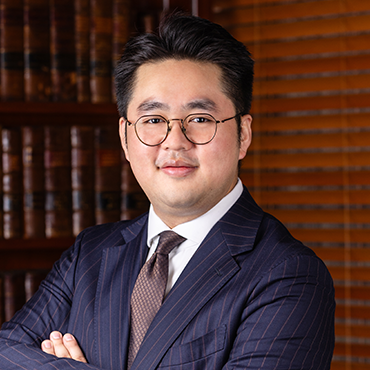
Donald Ting, led by Mr. Hectar Pun SC, represented the 1st Interested Party (Lee Cheuk Fung Jeff) in Target Insurance Co Ltd (In Compulsory Liquidation) v Nerico Brothers Ltd [2026] 1 HKLRD 701; [2025] HKCA 1024.
Upon a petition presented by the petitioner insurer (P) based on an unsatisfied statutory demand for US$154,177,206.74, a winding-up order was made against the respondent company (C). At a time when L was its sole director, C filed a notice of appeal against the winding-up order. On P’s application, the Court of Appeal struck out that notice of appeal as disclosing no reasonable ground of appeal and was an abuse of process in being frivolous and vexatious. On a non-party costs summons taken out by P to seek costs against L personally in relation to the appeal and the striking out application, the Court of Appeal ordered that L be joined as an interested party in the determination of the issue of whether a non-party costs order be made against him in P’s favour and directed a further hearing. In seeking a non-party costs order against L, counsel for P submitted as follows. L had acted in bad faith and/or improperly in causing C to appeal, as the appeal was plainly unarguable and not in the interests of C in that the interests of P, as C’s major creditor, had not been taken into account. Opposing such an order, counsel for L contended that the evidence filed by L showed that he pursued the appeal only after: (i) considering legal advice showing that there were merits in the intended appeal; and (ii) consulting C’s shareholder and creditors, and concluding that it was in C’s best interests to appeal. Finally, counsel for L argued that no non-party costs order should be made against L since P had failed to give him any early or timely warning that it might seek such an order against him if C appealed. That failure, L’s counsel argued, was a material factor to be taken into account in the exercise of the Court’s discretion to make, or refrain from making, a non-party costs order against L. After hearing counsel for P and counsel for L, the Court of Appeal determined the issue as set out below.
Held, ordering L to pay P’s costs of the appeal including those of the striking-out summons and the non-party costs summons, that:
(1) There was no dispute between the parties that the principles on which the courts acted when asked to exercise their discretion to order non-party costs against a director were those set out in Dymocks Franchise Systems (NSW) Pty Ltd v Todd (Costs) and summarised in Goknur v Aytacli (Dymocks Franchise Systems (NSW) Pty Ltd v Todd (Costs) [2004] 1 WLR 2807, Goknur v Aytacli [2021] 4 WLR 101 applied). (See para.19.)
(2) Nor was there any dispute between them that where a company was insolvent or nearing insolvency, its directors were under a duty to take the interests of the company’s creditors into account when exercising their powers. When a company was insolvent or nearing insolvency, the interests of the company were in reality the interests of its creditors, as it was their money that was at risk (Abdul Aziz Essa v Capital Globe Ltd [2012] 6 HKC 472, Re Carnival Group International Holdings Ltd [2022] HKCFI 3097, BTI 2014 LLC v Sequana SA [2024] AC 211 applied). (See para.20.)
(3) There were two crucial questions: (i) whether L held a bona fide belief that C had an arguable appeal; and (ii) whether he held a bona fide belief that it was in C’s best interests to appeal (Re North West Holdings Plc (in liq) (Costs) [2002] BCC 441 applied). (See para.25.)
(4) The Court’s answer to the first question was that it was of the clear view that L could not have formed a bona fide belief that the appeal had arguable merits. As to the second question, the Court did not accept that there was sufficient evidence to support the contention that L could have had a bona fide belief that it was in C’s best interests to appeal. (See paras.26-40.)
(5) In the context of natural justice and fairness, the rationale for requiring an applicant for a non-party costs order to give the non-party prior and timely warning before taking out an application for such an order was to provide the non-party with a reasonable opportunity to consider pursuing other possible alternatives instead of causing the company to pursue a hopeless course in the relevant legal proceedings. In the present case, there was no evidence from L that he would not have proceeded with the appeal, or would have pursued any alternative course, if he had been warned of P’s intention to apply for a non-party costs order against him if the appeal was struck out or failed. The failure to give L a timely warning did not render it unjust in all the circumstances of the case to make a non-party costs order against him (Symphony Group Plc v Hodgson [1994] QB 179, Re North West Holdings Plc (in liq) (Costs) [2002] BCC 441 applied). (See paras.41-44.)
Application
This was the petitioner’s application for an order of costs against a non-party sole director of a company following the striking out of a notice of appeal by the company against a winding-up order made against it (see [2022] HKCFI 1487, [2022] HKEC 1893 and [2023] HKCA 535, [2023] HKEC 1394).
[The above is excerpted from the headnote to the report in HKLRD.]