
Registrar of the Hong Kong Institute of Certified Public Accountants v Zhonghui Anda CPA Ltd [2026] 3 HKLRD 785, [2026] HKCA 1148 (Albert N B Wong)
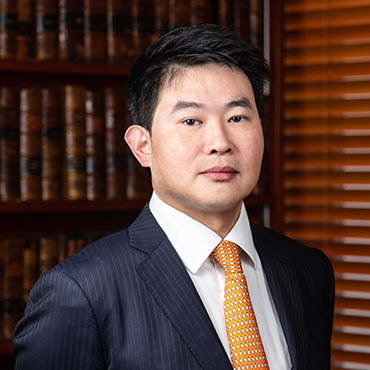
Albert N B Wong represented the 1st and 2nd respondents in Registrar of the Hong Kong Institute of Certified Public Accountants v Zhonghui Anda CPA Ltd [2026] 3 HKLRD 785, [2026] HKCA 1148.
The Registrar of the Hong Kong Institute of Certified Public Accountants (the Institute) lodged complaints against R1, an accounting firm, and R2, a certified public accountant, about their failure to observe professional standards in auditing a financial statement of a listed company. A Disciplinary Committee of the Institute (the Committee) conducted the hearing in 2022. Pursuant to the version of the Professional Accountants Ordinance (Cap.50) (the pre-amended PAO) in force before legislative amendments in 2021 which continued to apply to complaints lodged before the transition date, the Committee initially consisted of a chairperson and four other members. The chairperson and two of the members were lay members, while the remaining two members were certified public accountants. In 2023, the Committee informed the parties that the term of one of the lay members had expired and that it would deal with the complaints by the remaining four members. In 2024, the Committee found that the complaints against Rs were established. Rs were reprimanded and ordered to pay a penalty of $200,000 jointly and severally and costs. Rs appealed against the Committee’s decisions on the complaints and penalties on the grounds that: (i) the Committee was not properly constituted consistently with its statutory mandate as there was no majority of lay members as required by the pre-amended PAO (Ground 1); (ii) there was procedural unfairness when three lay members heard the case but only two made the decisions (Ground 2); and (iii) concerning penalties the Committee failed to give sufficient reasons for categorising the misconduct as “serious” when the Institute had considered it to be “moderate” (Ground 3).
Held, dismissing the appeal, that:
Ground 1
(1) On Ground 1, the Committee was validly constituted and had jurisdiction to make the decisions. Section 33B(1) of the pre-amended PAO provided for a quorum of four members, without specifically requiring a majority of lay members. Under ss.2(1) and 51 of the Interpretation and General Clauses Ordinance (Cap.1) (the IGCO), except where there was a contrary intention, a vacancy in the membership of a tribunal did not affect its power. Section 33B(2) of the pre-amended PAO only applied when a serving member was absent which resulted in an impasse to the continuation of proceedings and which may cause the Institute to dissolve the Disciplinary Committee. It did not apply when a member’s term had expired, in which case the quorum provision in s.33B(1) would apply to enable the remaining members to continue to act in the event of a vacancy. As the Committee was created by statute, the court should not lightly imply a term that the Committee which was quorate would automatically lack jurisdiction when a member’s term expired. Further, where the legislature intended that the quorum of other disciplinary tribunals should contain lay members, they were expressly provided for (Re Ballard and Arkin 34 DLR (3d) 758, Chao Pak Ki v Hong Kong Society of Accountants (CACV 12/2005, [2005] HKEC 1693), Cheung Tak Wing v Communications Authority [2018] 5 HKLRD 515, Jhanji v Law Society of Manitoba [2022] MBCA 78 applied; R (Bridgerow Ltd) v Cheshire West and Chester Borough Council [2014] EWHC 1187 (Admin) distinguished). (See paras.35-47.)
(2) There would in effect still be a lay member majority in a four-member Committee as the chairperson had a casting vote under s.52(2) of the IGCO. (See paras.48-49, 62.)
Ground 2
(3) Ground 2 had no merits. The rule of natural justice or fairness on the right to be heard entailed the right to know the case made against the person and a fair opportunity to answer to it, and that those who decide the case must also hear it. In the present case, Rs had the opportunity to put forward their opposition to the complaints. The remaining four members who constituted the Committee which made the decisions had all taken part in the hearing. Moreover, even if a member whose term had since expired were to have expressed sympathetic views in the course of a hearing, there would be no undermining of trust and confidence in the proceedings or perception of unfairness as views expressed by a judge at hearings were tentative in nature, and that vacancies in a court constituted an ordinary risk associated with litigation (Kanda v Malaya [1962] AC 322, R v Greater Manchester Valuation Panel, ex p Shell Chemicals UK Ltd [1982] 1 QB 255, O’Reilly v Mackman [1983] 2 AC 237, Boodhoo v Attorney General of Trinidad and Tobago [2004] 1 WLR 1689, R (Hill) v Institute of Chartered Accountants in England and Wales [2014] 1 WLR 86 applied; Doyle v Canada (Restrictive Trade Practices Commission) (1985) 21 DLR (4th) 366, Dr Chan Hei Ling Helen v Medical Council of Hong Kong [2009] 4 HKLRD 174, Hysan Development Co Ltd v Town Planning Board (CACV 232/2012, [2014] HKEC 1869) distinguished). (See paras.56-64, 66.)
Ground 3
(4) Ground 3 also had no merits. The duty to give reasons only required brief reasons which addressed the substantial issues. The adequacy of reasons given by a disciplinary tribunal depended on the nature and circumstances of the case. The Committee, which was entitled to take a different view on the severity of the misconduct after hearing the case, had given detailed reasons on why the complaints were established. Moreover, the sanctions involved a value judgment which did not always require detailed explanation or analysis (Oriental Daily Publisher Ltd v Commissioner for Television and Entertainment Licensing Authority (1997-98) 1 HKCFAR 279, Registrar of Hong Kong Institute of Certified Public Accountants v Tang Chung Wah [2022] 5 HKLRD 298 applied). (See paras.71-76.)
[The above is excerpted from the headnote to the report in HKLRD.]