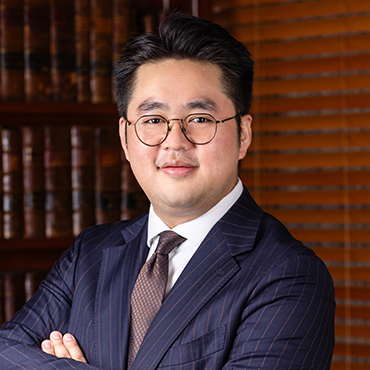

Ng Tung and Victor Chan & Co Solicitors [2026] 4 HKLRD 270, [2026] HKCFI 2720 (Donald Ting)
Donald Ting represented the defendant in Ng Tung and Victor Chan & Co Solicitors [2026] 4 HKLRD 270, [2026] HKCFI 2720
P was a former client of the defendant firm of solicitors (D). D had acted for P in High Court proceedings and in District Court proceedings. Each set of proceedings concerned different claims by P to adverse possession to land. The trial of the High Court proceedings began on 9 January 2024 and were settled on the 11th of that month. P soon changed his mind about the settlement. On 14 February 2026, D terminated its retainers in both sets of proceedings upon P’s default in settling D’s bills and breakdown of trust. At issue were four bills of costs, three in respect of the High Court proceedings (the High Court Bills) and one in respect of the District Court proceedings (the District Court Bill) (together, the Four Bills), delivered by D to P between 20 October 2023 to 20 February 2024 in accordance with the Legal Practitioners Ordinance (Cap.159), totalling $1,978,320. P paid D a total of $1,250,000, leaving, on D’s case, an outstanding balance of $703,320.
On 6 May 2024, D commenced an action in the District Court to recover the outstanding balance from P. By an originating summons taken out on 10 October 2024 (the OS), P sought an order for the taxation of the Four Bills. P alleged that: (i) the Four Bills were unreasonable and excessive; (ii) D had agreed to a flat fee of $1,200,000 for the High Court proceedings up to the conclusion of that trial; (iii) D and P’s trial counsel in the High Court had been negligent and/or had put undue pressure on him, but the OS was not concerned with the quality of the advice and the professional negligence matters in conducting the High Court trial was not directly concerned with the present taxation proceedings.
At an adjourned hearing of the OS on 27 March 2025, the Master directed P to issue a fresh writ in the negligence action by 15 May 2025 and to include in that writ a preliminary issue as to whether there had been a flat fee arrangement. On 23 May 2025, P issued a generally indorsed writ in the negligence action against D and the trial counsel, but no relief was sought as to the preliminary issue. The statement of claim in the negligence action was served on 8 July 2025. At another adjourned hearing of the OS on 17 October 2025, after hearing substantive arguments the Master ordered that the OS be stayed pending the determination of the negligence action. D appealed to a Judge in Chambers against that stay. At issue was whether: (i) the taxation of the District Court Bill should be stayed pending the determination of the negligence action; (ii) the taxation of the High Court Bills should be stayed pending the determination of the negligence action; and (iii) if taxation was not stayed, terms (including a condition for interim payment) should be imposed.
Held, allowing the appeal, setting aside the stay, and making certain consequential orders and directions, that:
The District Court Bill
(1) On the basis that the amount involved in the District Court Bill was not substantial, the Master held that it would not be cost-effective to order taxation of it separate from taxation of the High Court Bills. But the Master erred in considering that a separate taxation of the District Court Bill would lead to an increase in costs. There was no overlap between the District Court Bill and the High Court Bills. Whether taxation of those bills would be dealt with separately or together, the costs incurred in taxation of the District Court Bill would be on top of the costs incurred in taxation of the High Court Bills. There was no reason to bundle up the two taxations. (See paras.35–36.)
(2) The retainer relationship between P and D in the District Court proceedings was not even mentioned in P’s statement of claim in the negligence action. P’s position must therefore be that that retainer was not the subject of any issue as to negligence. (See para.37.)
(3) Given that the District Court Bill was delivered more than two years ago and a substantial portion of it remained unpaid, deferring taxation of it would be prejudicial to D. (See para.39.)
(4) P had since succeeded in the District Court proceedings, and he was seeking costs against the counterparties therein. There was therefore benefit to both P and D to have their dispute over the District Court Bill resolved promptly. (See para.40.)
(5) All matters considered in the round, there were good reasons to depart from the Master’s order in respect of the District Court Bill. It would not be just to stay taxation of it pending the determination of the negligence action (Hong Lee & Co (a firm) v Sun Wai Chun (HCMP 5857/1999, 10 May 2000), Sutherland v CRB (a firm) [2023] 1 HKLRD 1, Peking University Resources (Holdings) Co Ltd v Peking University Resources Group Co Ltd [2025] HKCFI 2642 applied). (See paras.24–29, 41.)
The High Court Bills
(6) Gartell & Son v Yeovil Town Football & Athletic Club Ltd did not establish a general proposition that whenever a contracting party fell below the standard of reasonable care, a claim for failure of basis may arise. The retainer in the High Court Proceedings did not provide that D would only be entitled to be paid after the whole case had been concluded. It was uncommercial and unrealistic that if a solicitor had provided valuable service in, say, the preparation of trial bundles, or on giving advice before trial, his being somewhat negligent during the trial process would render his entire services valueless so that there would be a total failure of consideration. Even if D was negligent, it was unlikely that it would be wholly deprived of remuneration. If P succeeded in the negligence action, he may only obtain an award of damages against which the outstanding balance found to be due under the High Court Bills may be set off (Shaw v Leigh Day [2019] PNLR 2, Sutherland v CRB (a firm) [2023] 1 HKLRD 1, Gibson, Dunn & Crutcher (a firm) v Sunshine Success Global Inc [2026] 1 HKLRD 83 applied; Gartell & Son (a firm) v Yeovil Town Football & Athletic Club Ltd [2016] EWCA Civ 62 explained and distinguished). (See paras.28, 42–49.)
(7) Since the negligence action was still at an early stage, it would be unfair and counter-productive to keep the taxation of the High Court Bills in abeyance for the protracted period between now and determination of the negligence action. (See para.50.)
(8) Furthermore, the key issues to be resolved in the OS involved matters on which memory tended to fade with the passage of time. (See para.51.)
(9) Overall, there were good reasons to depart from the Master’s order in respect of the High Court Bills. The balance of fairness and convenience tilted in favour of not ordering a stay of taxation of the High Court Bills, despite the negligence action (Hong Lee & Co (a firm) v Sun Wai Chun (HCMP 5857/1999, 10 May 2000), Sutherland v CRB (a firm) [2023] 1 HKLRD1,Peking University Resources (Holdings) Co Ltd v Peking University Resources Group Co Ltd [2025] HKCFI 2642 applied). (See paras.24–29, 52.)
(10) The Court exercised its discretion to make an order for interim payment of $120,000 on account of P’s liability to D on the Four Bills (if any) on the terms as set out at para.59 of the present decision, after taking into account that: (i) P had not yet fully settled the Four Bills for over two years; (ii) there was no suggestion that D, being a Hong Kong solicitors’ firm, would be unable to return the differences even if there was excess payment; (iii) the District Court Bill was not subject to the negligence action; (iv) P had succeeded in the District Court proceedings and sought to recover the costs against the counterparties; and (v) P’s proposed undertaking was insufficient) (Sutherland v CRB(a firm) [2024] HKCA 331 applied). (See paras.30, 57–59.)
Appeal
This was an appeal by the defendant firm of solicitors to a Judge in Chambers against a Master’s decision staying the taxation of a former client’s four bills of costs in respect of two sets of proceedings pending the determination of his negligence action against those solicitors and the counsel instructed by them to represent him in one of the proceedings.
[Editor’s note: What happened is stated in the catchwords. Why is indicated in the above holdings.]
[The above is excerpted from the headnote to the report in HKLRD.]