
香港特別行政區 訴 徐凱駿 [2026] 4 HKLRD 252, [2026] HKCFI 1314 (Steven Kwan)
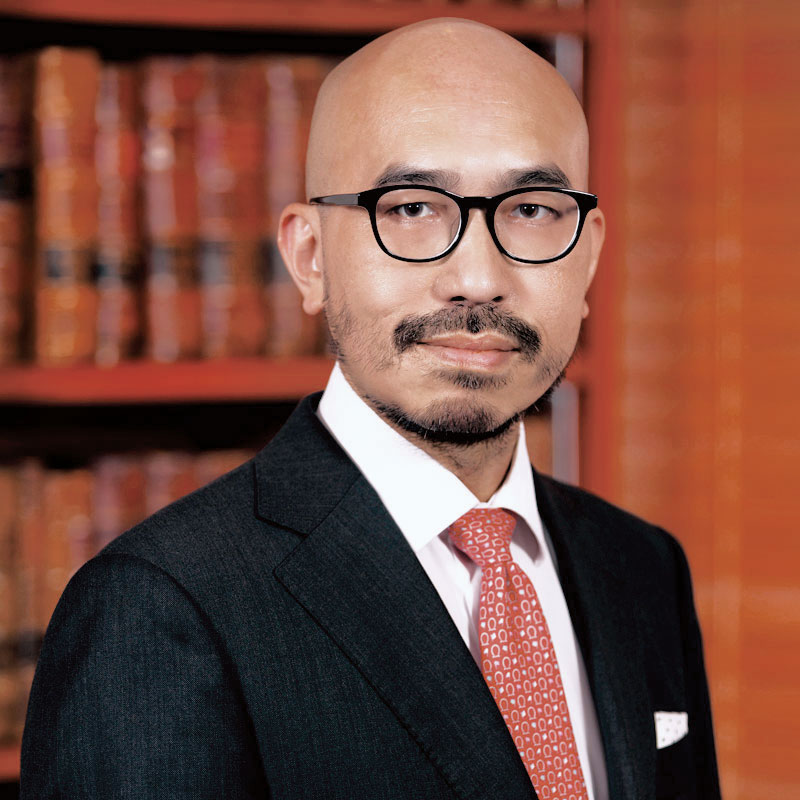
Steven Kwan represented the defendant in 香港特別行政區 訴 徐凱駿 [2026] 4 HKLRD 252, [2026] HKCFI 1314.
D pleaded guilty to four charges: (i) “doing an act or acts with a seditious intention” between 28 May 2020 and 27 September 2022 (Charge 1);*1 (ii) “intentionally publishing altered lyrics of the national anthem with intent to insult the same” between 12 June 2020 and 27 September 2022 (Charge 2); (iii) “intentionally publishing the insulting in any way of the national anthem with intent to insult the same” between 10 September 2020 and 27 September 2022 (Charge 3); and (iv) “intentionally publishing a desecration of the national flag with intent to desecrate the same” between 10 September 2020 and 27 September 2022 (Charge 4). The prosecution case was that, between 28 May 2020 and 27 September 2022, D published, made available and continuously made available, through three online platforms and in the form of text, audio, images or video, 29 posts and items of content with a seditious intention. D was 16 years old at the time when the offence began and 18 at the time of sentence. On 14 December 2022 the Chief Magistrate sentenced D to detention in a training centre on the four charges and ordered the sentences on all charges to run concurrently. On the same day, D appealed against both conviction and sentence. The Court of First Instance heard the appeal on 19 July 2023. Having regard to the fact that, within nine months, the Court of Appeal would hand down its decision in an appeal concerning the jurisdiction over the sedition offence (HKSAR v Tam Tak Chi, CACC 62/2022), which was an issue relevant to one of the grounds of D’s appeal against conviction, the Judge adjourned the present case until the Court of Appeal handed down the relevant decision. The Judge also had regard to the possibility that the Court of Appeal’s decision might be appealed to the Court of Final Appeal, so that the hearing of the present case might have to be adjourned for an indefinite and considerable period. The Judge also considered the fact that D had already been remanded for two and a half months before sentence and detained in the training centre for more than seven months after sentence. The Judge therefore granted D bail pending appeal. While on bail pending appeal, D received a 15-month probation order in another case. The aforementioned sedition case was appealed to the Court of Final Appeal, which subsequently handed down its judgment in HKSAR v Tam Tak Chi (2025) 28 HKCFAR 122 on 6 March 2025. In light of the Court of Final Appeal’s decision, D abandoned his appeal against conviction and maintained only his appeal against sentence, on the ground that the imposition of a training centre order was manifestly excessive.
At the resumed appeal hearing on 18 December 2025, the defence submitted that the prosecution of the charges were commenced after the expiry of the statutory time limit, on the grounds that: (i) the time limit for prosecuting Charge 1 was six months, and of the 29 items referred to in that charge, 26 were not prosecuted within six months; (ii) Charges 2 to 4 exceeded the statutory time limit for prosecution, namely two years after the commission of the offence or one year after its discovery, whichever was the earlier; and (iii) Charges 2 and 4 in fact occurred before the National Anthem Ordinance (Instrument A405) and the National Flag and National Emblem Ordinance (Instrument A401) came into operation.*2 The defence therefore contended that, apart from two of the items falling within Charge 1 which complied with the statutory requirements, the remaining prosecutions were invalid. The defence contended that, in sentencing, the Chief Magistrate had wrongly taken into account acts of publication and continued publication that were outside the limitation period, causing D to bear criminal liability exceeding that permitted by law and rendering the sentence manifestly excessive. The defence further submitted that D’s circumstances had materially changed since sentence, so that a training centre order was no longer suitable, for reasons including: (i) D had been detained for a total of nine and a half months and, since being granted bail pending appeal, had been released from the training centre for 29 months, so that the training was no longer continuous and his rehabilitation was affected; and (ii) D was already 21.5 years old at the time of the appeal hearing, whereas a training centre order was directed principally at young offenders between the ages of 14 and 21, so that its applicability was greatly reduced; and (iii) a sentence of immediate imprisonment would lead to the revocation of the existing probation order placed on D in another case. The defence submitted that the appropriate course was to set aside the training centre order and to substitute it with a short term of imprisonment or a non-custodial sentence.
Held, allowing the appeal, setting aside the training centre order on the four charges, substituting it with a sentence enabling D’s immediate release, ordering the sentences on the four charges to run concurrently, that:
(1) The Court agreed with and adopted the Chief Magistrate’s determination on the issue on time limit for prosecution. The key element of Charge 1 was “doing”, but not, as the defence contended, confined to “publishing”. D’s overall criminal conduct continued both within and outside Hong Kong and was plainly of a continuing nature. As for Charges 2 to 4, the element of the charges was “publishing”. The statutory definition of “publish” included “to distribute, disseminate or make available to the public”, and “make available” may carry a continuing meaning. The time and act of publication should not be confined to the moment the publisher pressed the keyboard, but extend to the whole act and period during which, after publication and until the content was withdrawn, the content was available to the public to view. The offending conduct of Charges 1 to 4 was of a continuing nature, and the prosecutions were not time-barred; accordingly, the issue of retrospectivity raised by the defence in relation to Charges 2 and 4 does not arise. Even though the time limit for prosecuting Charge 1 was only six months, within that six months D had continuously used the online platforms in question to publish and continue to publish a total of 29 posts. Those channels of publication had the characteristics of instantaneous transmission, rapid dissemination and long-term circulation of content, causing the relevant statements to influence a wide audience in the public domain within a short time. Such conduct was continuing and systematic, and not an isolated occurrence. Even if the Court considered only D’s acts of publication and continued publication within that six-month limitation period, the seriousness of his commission of the present offences was not diminished (Byrne v Deane [1937] 1 KB 818, Oriental Press Group Ltd v Fevaworks Solutions Ltd (2013) 16 HKCFAR 366 applied). (See paras.45–46, 50.)
(2) In sentencing a young defendant, the court was required to give priority to a non-custodial sentence. In imposing a training centre order on the day of sentence, the Chief Magistrate had not erred in principle, and the sentence was not manifestly excessive. However, exceptional circumstances existed in the present case. The execution of D’s training centre order had by now been interrupted for nearly two and a half years, and other rehabilitative sentences were also inappropriate for D, who had reached the age of 21. Three years had elapsed between sentence and the day of the appeal hearing, and the objective circumstances had materially changed. D had been detained for two and a half months before sentence and, after sentence and before being granted bail, detained in the training centre for more than seven months. For a young person with no criminal record, a total of nine and a half months’ detention was a short and deterrent experience. If a sentence of immediate imprisonment were imposed, the overall sentence would become excessive and disproportionate. The Court also did not intend to interrupt the probation order made on D in another case. In view of the above exceptional circumstances, a shorter term of immediate imprisonment was most appropriate. Having considered the overall circumstances of the case and D’s culpability, the starting point for Charge 1 was 14 months’ imprisonment, and the starting point for each of Charges 2 to 4 was 4 months’ imprisonment, all to run concurrently. As D had already undergone nine and a half months’ detention, his total sentence was reduced as a matter of discretion to a sentence enabling immediate release (香港 特別行政區 v 崔家瑋 (CACC 372/2011, [2012] CHKEC 772), SJ v Leung Hiu Yeung (2018) 21 HKCFAR 421 considered). (See paras.47–53.)
Appeal against sentence
This was the defendant’s appeal against the sentence of a training centre order imposed after his plea of guilty to four charges in relation to sedition, insulting the national anthem and desecrating the national flag.
[The above is excerpted from the headnote to the report in HKLRD.]